
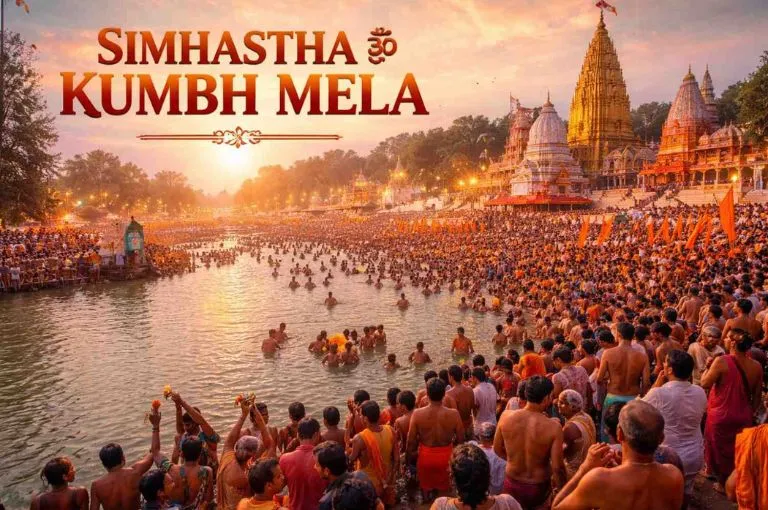

Ujjain Simhastha Kumbh Mela 2028 will be a major pilgrimage gathering in Ujjain, Madhya Pradesh, centred around the sacred Shipra (Kshipra) River. Ujjain hosts Simhastha once every 12 years, and the city is also home to Shri Mahakaleshwar Jyotirlinga, one of the twelve Jyotirlingas.
The currently published Simhastha planning calendar places the main festival period from 27 March 2028 to 27 May 2028, with three principal Shahi Snan dates currently listed as 9 April, 23 April and 8 May 2028. Because detailed bathing timings, routes, traffic plans, ghat access and crowd-management arrangements can change, travellers should confirm the final government/administrative notification before travelling.
Ujjain Simhastha 2028 at a Glance
Destination: Ujjain, Madhya Pradesh, India
River: Shipra/Kshipra River
Festival: Simhastha Kumbh Mela
Current published festival period: 27 March–27 May 2028
Principal Shahi Snan dates: 9 April, 23 April and 8 May 2028
Main pilgrimage attractions: Mahakaleshwar Jyotirlinga, Mahakal Lok, Ram Ghat, Harsiddhi Temple, Kal Bhairav Temple, Mangalnath Temple, Sandipani Ashram and Vedh Shala.
What Is Simhastha Kumbh Mela?
Simhastha is Ujjain’s Kumbh gathering, traditionally associated with the astrological position of Jupiter in Leo and held approximately once every twelve years. The religious focus includes sacred bathing in the Shipra, visits to temples, religious discourses, akharas, saints, sadhus, processions and devotional activities.
For pilgrims, Simhastha is not simply a sightseeing festival. It is primarily a religious pilgrimage, and the experience can involve walking considerable distances, waiting in queues and following temporary administrative arrangements.
Simhastha 2028 Dates
The currently published schedule is:
| Date | Event |
|---|---|
| 27 March 2028 | Opening of the current Simhastha festival period |
| 9 April 2028 | First Shahi Snan |
| 23 April 2028 | Second Shahi Snan |
| 8 May 2028 | Final Shahi Snan |
| 27 May 2028 | Closing of the current festival period |
The three Shahi Snan dates are expected to be particularly busy. Accommodation, trains, buses, taxis, parking and pedestrian routes may experience substantially higher demand around these dates.
Important: Do not treat unofficial websites as the final authority for exact Snan timings or access arrangements. Final arrangements should be checked against official Ujjain district, Madhya Pradesh government and Simhastha administration announcements closer to the event.
Why Visit Ujjain During Simhastha?
A Simhastha visit combines pilgrimage with the cultural heritage of one of Madhya Pradesh’s historic temple cities. The Shipra riverfront becomes the centre of religious activity, while Ujjain’s temples provide additional pilgrimage opportunities.
The city has more than 100 temples and a long association with Hindu religious traditions.
Visitors can combine the Kumbh experience with:
- Shipra River holy bathing
- Mahakaleshwar Jyotirlinga darshan
- Mahakal Lok
- Ram Ghat
- Harsiddhi Mata Temple
- Kal Bhairav Temple
- Mangalnath Temple
- Sandipani Ashram
- Gad Kalika Temple
- Bada Ganesh Temple
- Gopal Mandir
- Vedh Shala
- Triveni Museum
Holy Bathing in the Shipra River
The Shipra is central to the religious identity of Ujjain and Simhastha. Ram Ghat is one of the city’s historic bathing ghats and an important location associated with the Kumbh Mela.
During Simhastha, pilgrims should bathe only at officially designated and open bathing areas. Ghat access can be restricted because of crowd density, river conditions, security arrangements or administrative instructions.
Follow instructions from police, volunteers and mela officials, particularly on Shahi Snan days.
Shahi Snan
Shahi Snan, also called Amrit Snan in some current Simhastha materials, refers to the principal ceremonial bathing occasions associated with the akharas.
The currently published dates are:
9 April 2028 – First Shahi Snan
23 April 2028 – Second Shahi Snan
8 May 2028 – Final Shahi Snan
The atmosphere around these days is expected to be especially busy. Visitors should expect temporary traffic restrictions, pedestrian diversions, security checks and changes to normal city movement.
Mahakaleshwar Jyotirlinga
Shri Mahakaleshwar Temple is Ujjain’s most important pilgrimage attraction and one of India’s twelve Jyotirlingas.
If your Simhastha trip includes Mahakaleshwar darshan, plan the temple visit separately from your mela visit. During the Kumbh period, normal city movement and temple access can be significantly different from ordinary days.
For Bhasma Aarti, advance registration through the authorised Mahakaleshwar temple system is required. Madhya Pradesh Tourism specifically directs visitors to the authorised temple website for registration.
Do not rely on unofficial agents promising guaranteed special access.
Mahakal Lok
Mahakal Lok is an important modern pilgrimage and visitor attraction around the Mahakaleshwar area. The corridor incorporates sculptures, pillars, murals and religious storytelling associated with Lord Shiva and is adjacent to the Rudrasagar area.
During Simhastha, allow additional time because crowd-control arrangements can affect entry and walking routes.
Harsiddhi Mata Temple
Harsiddhi Temple is one of Ujjain’s major Shakti pilgrimage sites and is close to the Mahakaleshwar area. Its distinctive lamp pillars and Maratha-era architectural character make it an important stop for pilgrims and visitors.
It is practical to combine Harsiddhi Temple with Mahakaleshwar, Mahakal Lok and Ram Ghat when pedestrian routes permit.
Kal Bhairav Temple
Kal Bhairav is another major Ujjain shrine and is traditionally regarded as an important guardian deity of the city.
The temple is particularly known for its distinctive offering tradition. Visitors should follow the temple’s current rules and local customs rather than assuming that ordinary sightseeing practices apply during Simhastha.
Mangalnath Temple
Mangalnath Temple is associated with Lord Mangal and has a significant place in Ujjain’s religious traditions. It is located away from the densest central temple cluster and can be included in a wider Ujjain sightseeing route.
Sandipani Ashram
Sandipani Ashram has an important place in Ujjain’s traditional mythology and is associated with the education of Krishna, Balarama and Sudama.
It is a useful addition for travellers interested in the religious and cultural history of Ujjain.
Vedh Shala – Ujjain Observatory
Vedh Shala, also known as Jantar Mantar, is an historic astronomical observatory established under Maharaja Sawai Jai Singh II. The observatory contains architectural instruments used for astronomical observations and time-related calculations.
It provides a different experience from the city’s temples and ghats and can be included in a sightseeing itinerary.
How to Reach Ujjain for Simhastha 2028
By Air
The nearest major airport is Devi Ahilyabai Holkar International Airport, Indore.
The Ujjain district administration lists Indore Airport at approximately 53 km from Ujjain, while Madhya Pradesh Tourism gives approximately 55 km.
From Indore Airport, travellers can continue to Ujjain by:
- Private taxi
- Pre-booked cab
- Bus
- Tour vehicle
- Rental car
During Simhastha, road travel times can be considerably longer than normal because of traffic diversions and controlled vehicle movement.
By Train
Ujjain Junction is a major railway station with connections to numerous Indian cities. Its railway code is UJN. The district administration confirms that Ujjain is connected by rail with major cities.
For Simhastha, train travel can be particularly useful for pilgrims travelling from:
- Delhi
- Jaipur
- Kota
- Ahmedabad
- Mumbai
- Surat
- Vadodara
- Indore
- Bhopal
- Ratlam
- Kota
- Other major North, West and Central Indian cities
Exact special trains for Simhastha 2028 should be checked once Indian Railways publishes the festival-specific schedule.
By Road
Ujjain has road connections with Indore, Bhopal, Ahmedabad, Ratlam, Kota and other cities. The district administration lists regular bus connections and major road links.
Road travel is convenient for families and groups, but during Simhastha you should not assume that a vehicle will be allowed to reach your hotel or ghat directly.
Temporary parking areas and shuttle arrangements may be introduced.
Rajasthan to Ujjain Simhastha 2028
For travellers from Rajasthan, Ujjain can be incorporated into a larger Madhya Pradesh pilgrimage or Rajasthan–Malwa tour.
Popular starting points include:
Jaipur → Kota → Ujjain
Jaipur → Chittorgarh → Ratlam → Ujjain
Jodhpur → Ajmer → Chittorgarh → Ujjain
Udaipur → Chittorgarh → Ratlam → Ujjain
During the main mela period, advance planning is particularly important for groups travelling by Innova, Crysta, Tempo Traveller, Urbania, buses or other private vehicles.
Local Transport During Simhastha
Normal city transportation may not operate in exactly the same way during the mela.
Possible arrangements may include:
- Shuttle buses
- E-rickshaws
- Auto-rickshaws
- Taxis
- Designated parking
- Park-and-ride facilities
- Restricted vehicle zones
- Pedestrian corridors
- Temporary bus terminals
- Special railway arrangements
The final system will depend on the official traffic and crowd-management plan.
The best strategy is to park outside restricted zones and walk or use official shuttle services rather than trying to drive directly to a major ghat on a peak day.
Ujjain Simhastha Car Rental and Taxi Travel
Private vehicles can be useful for reaching Ujjain from Indore, Rajasthan, Gujarat, Maharashtra and other regions.
Popular vehicle categories for pilgrimage groups include:
- Sedan
- Toyota Etios-type car
- Dzire-type sedan
- SUV
- Innova
- Innova Crysta
- Kia Carens
- Tempo Traveller
- Force Urbania
- Mini bus
- Large tourist coach
For families, an SUV or Innova-class vehicle can provide more luggage capacity.
For groups of approximately 9–17 travellers, a Tempo Traveller or Urbania may be more practical.
For large pilgrimage groups, buses can be arranged, but the vehicle’s permitted route and parking location should be confirmed before arrival.
Accommodation During Simhastha
Accommodation should be booked as early as possible, especially around the three principal Shahi Snan dates.
Possible accommodation categories include:
- Hotels
- Guest houses
- Dharamshalas
- Ashrams
- Homestays
- Tourist camps
- Tent accommodation
- Mela-area accommodation
- Budget lodges
- Premium hotels
Ujjain has accommodation options ranging from basic pilgrim facilities to conventional hotels. Madhya Pradesh Tourism also operates and lists accommodation properties in and around the destination.
Where to Stay
For a temple-focused trip, staying relatively close to central Ujjain can reduce daily travel.
For families wanting easier vehicle access, accommodation farther from the most congested temple and ghat areas may be more convenient.
For Shahi Snan dates, however, the most important consideration is not simply distance from the ghat. Check the official traffic plan and whether your accommodation lies inside or outside restricted movement zones.
How Many Days Are Needed?
A practical Simhastha visit can be planned in several ways.
2-Day Pilgrimage
Day 1: Arrival, Mahakaleshwar, Mahakal Lok, Harsiddhi Temple, Ram Ghat
Day 2: Shipra Snan, Kal Bhairav, Mangalnath, Sandipani Ashram and departure
3-Day Ujjain Pilgrimage
Day 1: Arrival and hotel check-in, Mahakal Lok, evening Shipra River visit
Day 2: Mahakaleshwar darshan/Bhasma Aarti if pre-booked, Harsiddhi Temple, Ram Ghat
Day 3: Kal Bhairav, Mangalnath, Sandipani Ashram, Vedh Shala and departure
4–5 Day Simhastha Experience
This is more comfortable for travellers who want to combine:
- Shahi Snan
- Akhara activities
- Temple visits
- Shipra ghats
- Mahakal Lok
- Local sightseeing
- Spiritual programmes
- Nearby destinations
Ujjain + Omkareshwar Tour
Ujjain can be combined with Omkareshwar, another important Jyotirlinga destination in Madhya Pradesh.
A longer pilgrimage circuit can include:
Indore → Ujjain → Omkareshwar → Maheshwar → Mandu → Indore
Madhya Pradesh Tourism also promotes multi-destination routes connecting Ujjain with Omkareshwar, Maheshwar and Mandu.
Ujjain + Indore Tour
A convenient itinerary is:
Day 1: Indore arrival → Ujjain transfer
Day 2: Mahakaleshwar → Mahakal Lok → Harsiddhi → Ram Ghat
Day 3: Kal Bhairav → Mangalnath → Sandipani Ashram → Vedh Shala
Day 4: Ujjain → Indore sightseeing → departure
Ujjain + Omkareshwar + Maheshwar + Mandu
For travellers coming from outside Madhya Pradesh, a longer circuit can include:
Indore → Ujjain → Omkareshwar → Maheshwar → Mandu → Indore
This works particularly well for families, private groups and international visitors who want a broader cultural experience rather than only the Kumbh.
Food in Ujjain
Visitors can find vegetarian food throughout the city.
Popular local and regional dishes include:
- Dal Bafla
- Poha
- Jalebi
- Bhutte Ka Kees
- Sabudana Khichdi
- Kachori
- Samosa
- Lassi
- Milk-based sweets
- Traditional thali
During Simhastha, many pilgrims also choose simple satvik food.
Madhya Pradesh Tourism highlights local dishes such as Bhutte Ka Kees, Dal Bafla and Sabudana Khichdi as part of Ujjain’s food experience.
Shopping in Ujjain
Visitors can look for:
- Rudraksha
- Religious books
- Puja items
- Brass devotional articles
- Shiva idols
- Temple souvenirs
- Traditional textiles
- Handicrafts
- Local snacks and sweets
For genuine religious articles, compare prices and quality before purchasing.
Madhya Pradesh Tourism also highlights Behrugarh for traditional Batik printing.
What to Pack for Simhastha 2028
Carry:
- Comfortable walking shoes
- Sandals/flip-flops
- Lightweight cotton clothing
- Traditional temple-appropriate clothing
- Small backpack
- Water bottle
- Personal medicines
- Basic first-aid supplies
- Sunscreen
- Sunglasses
- Hat/cap
- Power bank
- Mobile phone
- Government ID
- Hotel booking information
- Train/flight tickets
- Emergency contact information
- Small amount of cash
- Waterproof pouch for valuables
Avoid carrying unnecessary luggage into crowded mela areas.
Clothing for Temple and Mela Visits
Comfortable, modest clothing is recommended.
For temples:
- Wear respectful clothing.
- Follow individual temple dress rules.
- Remove footwear where required.
- Follow photography restrictions.
- Do not enter restricted areas.
For the mela:
- Choose lightweight clothing.
- Wear shoes suitable for long-distance walking.
- Carry an extra set of clothes if you plan to bathe in the Shipra.
Mobile Phone and Internet Safety
During a huge pilgrimage gathering, mobile networks can become congested.
Before entering crowded areas:
- Fully charge your phone.
- Save your hotel’s name and address offline.
- Keep important phone numbers written down.
- Carry a power bank.
- Use a waterproof pouch.
- Do not depend entirely on mobile internet for navigation.
For family groups, establish a meeting point in case someone becomes separated.
Children and Elderly Travellers
Simhastha can be physically demanding.
For elderly travellers:
- Minimise unnecessary walking.
- Avoid the busiest areas during peak periods unless the pilgrimage requires it.
- Carry prescribed medicines.
- Take regular rest breaks.
- Keep drinking water.
- Consider accommodation with easier access.
- Use authorised transport services.
For children:
- Keep identification/contact information with them.
- Photograph important documents securely.
- Establish a family meeting point.
- Avoid allowing children to walk independently in dense crowds.
Safety During Shahi Snan
Shahi Snan days require additional caution.
Follow these principles:
- Follow police and mela administration instructions.
- Use only designated bathing areas.
- Do not push through barricades.
- Do not attempt to enter restricted akhara areas.
- Keep valuables to a minimum.
- Stay with your group.
- Avoid stopping suddenly in narrow pedestrian corridors.
- Follow one-way walking routes.
- Do not climb temporary structures or barricades.
- Contact official personnel if you become separated from your group.
Lost and Found Planning
Before entering the mela:
- Take a photograph of your family members.
- Give children an identification card.
- Write your hotel name and contact number on a card.
- Establish a meeting point.
- Save emergency contacts.
- Keep essential documents separately from cash.
Do not rely exclusively on a mobile phone.
Health Precautions
Large gatherings require normal precautions against dehydration, heat exposure, food-related illness and exhaustion.
Drink safe water, eat from hygienic establishments, wash your hands regularly and rest when necessary.
Travellers with existing medical needs should carry sufficient personal medication and relevant prescriptions.
If you feel unwell, use an official medical facility rather than delaying treatment.
Photography and Videography
Photography can be attractive around:
- Shipra River
- Ram Ghat
- Mahakal Lok
- Temple exteriors
- Religious processions
- Cultural activities
However, always follow restrictions at temples, bathing areas, security checkpoints and religious ceremonies.
Do not photograph people in a disrespectful manner, particularly during private religious rituals.
Foreign Travellers
International visitors should prepare:
- Passport
- Appropriate Indian visa
- Travel insurance
- Hotel confirmation
- Emergency contacts
- Local transportation information
- Copies of important documents
Keep passport and valuables secure.
Because Simhastha is an extremely large gathering, foreign visitors may find a pre-arranged airport transfer, hotel and local guide more convenient than attempting to arrange everything after arrival.
Suggested Simhastha Travel Packages
A travel company can structure Ujjain Simhastha packages around different traveller needs.
Ujjain Simhastha 2 Nights / 3 Days
Indore Airport/Station pickup
Ujjain hotel
Mahakaleshwar darshan
Mahakal Lok
Harsiddhi Temple
Ram Ghat
Kal Bhairav
Local sightseeing
Drop at Indore
Ujjain Simhastha 3 Nights / 4 Days
Indore arrival
Ujjain transfer
Temple sightseeing
Mahakaleshwar
Mahakal Lok
Shipra River
Shahi Snan participation according to official arrangements
Kal Bhairav
Mangalnath
Sandipani Ashram
Departure
Ujjain Simhastha 4 Nights / 5 Days
Indore
Ujjain
Simhastha activities
Mahakaleshwar
Mahakal Lok
Shahi Snan
Kal Bhairav
Mangalnath
Omkareshwar
Return to Indore
Ujjain Simhastha 5 Nights / 6 Days
Indore → Ujjain → Omkareshwar → Maheshwar → Mandu → Indore
This is suitable for travellers wanting both the Simhastha experience and Madhya Pradesh heritage destinations.
Private Car Options
For private tours, commonly requested categories include:
Sedan: 1–3 passengers
SUV: 4–6 passengers
Innova: families and small groups
Innova Crysta: premium family/group travel
Tempo Traveller: approximately 9–17 passengers depending on configuration
Urbania: larger premium group travel
Mini Bus: larger pilgrimage groups
Tourist Coach: large groups
Vehicle availability and permissible routes during Simhastha will depend on the official traffic plan.
Important Booking Strategy
For the three major Shahi Snan dates, plan in this order:
First: Decide the travel dates.
Second: Book accommodation.
Third: Book train or flight tickets.
Fourth: Arrange local transportation.
Fifth: Check Mahakaleshwar darshan/Bhasma Aarti requirements.
Sixth: Check the latest Simhastha traffic and ghat-access instructions.
Seventh: Keep one flexible day if possible.
This approach reduces the risk of building an itinerary around a transport connection that becomes impractical because of temporary mela restrictions.
Best Time Within the Simhastha Period
There is no single travel period that suits everyone.
Travellers primarily interested in the Shahi Snan experience should plan around the officially announced principal bathing dates.
Travellers who want a less concentrated pilgrimage experience can consider visiting during other parts of the published festival period, subject to the actual crowd levels and official arrangements at that time.
Travellers interested mainly in Ujjain temples and sightseeing may prefer dates outside the biggest bathing-day peaks.
Important Difference Between Ordinary Ujjain and Simhastha Ujjain
A normal Ujjain trip allows relatively flexible movement around the city.
Simhastha changes that experience.
During the mela:
- Roads may be diverted.
- Some areas may become pedestrian-only.
- Vehicles may be stopped at designated points.
- Parking may be outside the city centre.
- Hotel-to-temple travel may take longer.
- Walking may be unavoidable.
- Temple queues may be much longer.
- Public transport arrangements may change.
- Security checks may be increased.
- Ghat access may be controlled.
Therefore, do not plan Simhastha like an ordinary Ujjain sightseeing tour.
Practical Daily Routine
A comfortable pilgrimage day can follow this pattern:
Early morning: Temple/darshan or bathing activity
Morning: Breakfast and rest
Late morning: Less crowded sightseeing where possible
Afternoon: Hotel rest
Evening: Shipra River, Ram Ghat or approved religious programme
Night: Dinner and return to accommodation
On major Snan days, however, follow the official schedule instead of a normal sightseeing timetable.
Important Official Information to Check Before Travel
As 2028 approaches, check:
- Final Simhastha dates
- Final Shahi Snan timings
- Akhara procession schedules
- Ghat allocation
- Traffic diversions
- Parking locations
- Shuttle services
- Railway special trains
- Bus arrangements
- Temple darshan rules
- Bhasma Aarti booking
- Accommodation rules
- Medical facilities
- Emergency services
- Weather conditions
- Any restrictions on private vehicles
The Ujjain district administration maintains official notices and travel information, including its transportation guidance.
Final Ujjain Simhastha 2028 Travel Checklist
Before leaving home, make sure you have:
☐ Confirmed travel dates
☐ Hotel/accommodation booking
☐ Train/flight tickets
☐ Local vehicle booking if required
☐ Government ID
☐ Mahakaleshwar booking where applicable
☐ Comfortable walking shoes
☐ Suitable clothing
☐ Medicines
☐ Water bottle
☐ Power bank
☐ Emergency contacts
☐ Hotel details saved offline
☐ Family meeting point
☐ Cash and digital payment options
☐ Latest official traffic instructions
☐ Latest ghat/Snan instructions
1. General Questions
1. What is Ujjain Simhastha Kumbh Mela 2028?
It is the 2028 edition of the Simhastha Kumbh Mela, a major Hindu pilgrimage and religious gathering held in Ujjain on the banks of the sacred Kshipra River.
2. Where is Simhastha 2028 held?
It is held in Ujjain, Madhya Pradesh, India, particularly around the Kshipra River ghats and major pilgrimage areas.
3. Why is Ujjain important for Kumbh?
Ujjain is one of the four traditionally recognized Kumbh pilgrimage cities. The Ujjain event is commonly known as Simhastha.
4. How often is Simhastha held in Ujjain?
It is traditionally held approximately once every 12 years.
5. When was the previous Ujjain Simhastha?
The previous major Ujjain Simhastha was held in 2016.
6. When is the next Simhastha after 2028?
The next cycle would ordinarily be approximately 12 years later, subject to the relevant astronomical and official calendar.
2. Dates & Bathing Questions
7. What are the exact dates of Simhastha 2028?
Visitors should rely on the final dates announced by the Madhya Pradesh government and Ujjain district administration. Detailed official 2028 bathing schedules should be checked as they are notified.
8. What are Shahi Snan dates?
The principal auspicious bathing dates are traditionally associated with major religious observances and Akharas. The final 2028 schedule should be confirmed from official notifications before booking travel.
9. What is the importance of Shahi Snan?
Shahi Snan is the ceremonial bathing of saints and religious orders, traditionally one of the most important events of the Kumbh/Simhastha.
10. Can ordinary devotees take a holy bath?
Yes. Devotees traditionally take a sacred bath in the Kshipra River, subject to the crowd-management and safety arrangements applicable at the time.
11. Is bathing compulsory to visit Simhastha?
No. A visitor can attend religious activities, temples, satsangs, cultural events and other pilgrimage activities without bathing.
3. Kshipra River & Ghats
12. Which river is associated with Ujjain Simhastha?
The Kshipra (Shipra) River.
13. Which ghat is famous in Ujjain?
Ram Ghat is one of Ujjain’s best-known religious ghats.
14. Can visitors bathe at any ghat?
Not necessarily. During the mela, authorities can designate particular bathing zones and impose temporary restrictions for crowd and safety management.
15. Will bathing arrangements change during Simhastha?
Yes, temporary arrangements, barricading, entry/exit routes and designated bathing areas may be introduced depending on the official mela plan.
4. Mahakaleshwar Temple FAQ
16. Is Mahakaleshwar Temple part of a Simhastha trip?
Yes. A visit to Shri Mahakaleshwar Jyotirlinga is a major pilgrimage activity for many visitors to Ujjain.
17. What is special about Mahakaleshwar?
Mahakaleshwar is one of the 12 Jyotirlingas of India and is located in Ujjain. The official temple site describes it as the only south-facing Jyotirlinga.
18. Can I book Mahakal darshan online?
The official temple system currently provides online services including Sheeghra Darshan, Bhasma Aarti, Sandhya Aarti, Shayan Aarti and Pujan/Abhishek booking.
19. Can I book Bhasma Aarti online?
The official Mahakaleshwar portal provides Bhasma Aarti booking services. Availability and booking rules should be checked for the required date.
20. Should I book Mahakal darshan before travelling for Simhastha?
It is sensible to check the official booking system well in advance because Simhastha is expected to bring very large numbers of pilgrims.
21. Can I book puja online?
Yes, the official temple portal currently offers online Pujan/Abhishek services.
5. How to Reach Ujjain
22. How can I reach Ujjain by train?
Ujjain has an important railway station with connections to major Indian cities. During Simhastha, special trains and railway arrangements may be announced.
23. How can I reach Ujjain by air?
The nearest major commercial airport is Devi Ahilya Bai Holkar International Airport, Indore. From Indore, visitors can continue to Ujjain by road or rail.
24. How far is Indore from Ujjain?
Ujjain and Indore are relatively close and are connected by road and rail. Exact travel time varies according to traffic and Simhastha restrictions.
25. Can I travel to Ujjain by bus?
Yes. State and private bus services connect Ujjain with surrounding cities, although special Simhastha transport arrangements may change normal routes.
26. Can I drive my own car?
Yes, but during peak mela periods authorities may introduce vehicle restrictions, designated parking areas, shuttle services and diversion routes.
27. Can I hire a taxi to Ujjain?
Yes. Taxi and chauffeur-driven car services can be arranged from cities such as Indore, Bhopal, Ahmedabad, Jaipur, Delhi and Mumbai.
6. Ujjain Simhastha Car Rental & Transport FAQ
28. Can I book a private car for Simhastha 2028?
Yes. Visitors can arrange private cars, taxis or chauffeur-driven vehicles.
29. Which cars are suitable for a family?
Common choices include:
- Sedan
- Toyota Innova
- Innova Crysta
- Kia Carens
- Toyota Rumion
- Tempo Traveller for groups
- Luxury cars for premium travel
30. Is Innova Crysta suitable for Simhastha?
Yes, it can be convenient for families or small groups because of its passenger and luggage capacity.
31. Is Tempo Traveller available for groups?
Tempo Traveller-type vehicles are commonly used for larger pilgrimage groups, subject to availability and local transport regulations.
32. Can I book an airport transfer from Indore to Ujjain?
Yes. An Indore Airport–Ujjain private transfer can be arranged.
33. Can I book a one-way taxi?
Yes, depending on the operator.
34. Can I book a round-trip taxi?
Yes. Round-trip packages can be useful for pilgrims staying outside Ujjain.
35. Can I hire a car for the entire Simhastha period?
Yes, subject to availability, operator terms and applicable traffic restrictions.
36. Will taxis be allowed inside every mela area?
Not necessarily. During peak periods, authorities may restrict vehicles from high-density pilgrimage zones. Visitors may need to use designated parking and walk or take shuttle transport.
37. Is advance transport booking recommended?
For peak dates, advance planning is advisable, especially for airport transfers, railway-station transfers, group vehicles and multi-day bookings.
7. Accommodation FAQ
38. Where can I stay during Simhastha?
Possible accommodation categories include:
- Hotels
- Resorts
- Dharamshalas
- Guest houses
- Ashrams
- Pilgrim camps
- Tent accommodation
- Homestays
- Accommodation outside central Ujjain
The Ujjain district administration maintains an accommodation information section covering hotels, resorts and dharamshalas.
39. Should I stay in Ujjain or outside Ujjain?
That depends on availability, budget and mobility requirements. During peak dates, staying outside the busiest pilgrimage zone can sometimes make transport planning easier.
40. Can I stay in Indore?
Yes. Indore can be considered when Ujjain accommodation is unavailable or when visitors prefer to stay in a larger city.
41. Can I stay in Dewas?
Yes, depending on accommodation availability and the transport situation during the mela.
42. Should I book a hotel early?
For major bathing dates and peak pilgrimage periods, early booking is advisable.
43. Will hotel prices increase during Simhastha?
Rates can vary according to demand, dates, room category and availability. Visitors should compare the total price and cancellation conditions before booking.
8. Food & Facilities
44. Will food be available during Simhastha?
Yes. Temporary and permanent food facilities are generally available, although exact mela arrangements will be announced by the authorities.
45. Are vegetarian meals available?
Yes, vegetarian food is widely available in Ujjain.
46. Will drinking water be available?
Pilgrimage-event authorities normally establish drinking-water facilities, but visitors should still carry a personal water bottle where permitted.
47. Will toilets be available?
Temporary sanitation facilities are generally established for large pilgrimage gatherings. Exact locations should be checked from the official mela administration.
9. Safety FAQ
48. Is Simhastha safe for families?
Families can attend, but they should prepare carefully for extremely crowded conditions, particularly on major bathing days.
49. What should senior citizens do?
Senior citizens should avoid unnecessarily crowded areas, carry identification and medicines, use designated facilities and travel with companions.
50. Can children attend Simhastha?
Yes, but children should remain under close supervision.
51. What should I do if I become separated from my family?
Immediately approach the nearest police/help desk or designated lost-and-found centre. Keep children’s identification/contact information with them.
52. Should I carry original documents?
Carry appropriate identification, but avoid carrying unnecessary valuables.
53. Should I carry cash?
A combination of digital payment and a reasonable amount of cash can be useful because network connectivity or payment availability may vary in crowded areas.
10. Mobile & Internet
54. Will mobile networks work?
Mobile services generally operate in Ujjain, but extremely large crowds can place additional load on networks.
55. Should I carry a power bank?
Yes. It can be useful during long pilgrimage days.
56. Should I save important phone numbers?
Yes. Save your accommodation, transport provider, family contacts and official emergency/help numbers.
11. Tourist Attractions
57. What should I visit besides Mahakaleshwar?
Popular Ujjain attractions include:
- Mahakaleshwar Jyotirlinga
- Mahakal Lok
- Ram Ghat
- Kal Bhairav Temple
- Harsiddhi Temple
- Mangalnath Temple
- Sandipani Ashram
- Vedh Shala / Jantar Mantar
- Gadkalika Temple
- Kshipra River ghats
58. Can I combine Simhastha with a Madhya Pradesh tour?
Yes. Ujjain can be combined with destinations such as Indore, Omkareshwar, Maheshwar, Mandu, Bhopal and Sanchi, depending on the itinerary and road conditions.
12. Family & Group Tours
59. Can I book a Simhastha family package?
Yes. A package can combine accommodation, transport, sightseeing and pilgrimage assistance.
60. Can I organize a group pilgrimage?
Yes. Groups can arrange buses, Tempo Travellers, multiple cars, accommodation and coordinated transfers.
61. What vehicle is best for 10–15 people?
A Tempo Traveller or similar group vehicle may be practical, subject to availability and applicable regulations.
62. What vehicle is best for 30–50 people?
A suitable tourist bus is generally more practical for larger groups.
63. Can tour operators organize complete Simhastha packages?
Yes. Packages can be customized around accommodation, transport, sightseeing and pilgrimage requirements.
13. Booking FAQ
64. When should I book my Simhastha trip?
For peak dates, early planning is recommended.
65. Can I book a customized package?
Yes. Packages can be customized by:
- Number of people
- Number of nights
- Hotel category
- Vehicle type
- Arrival city
- Sightseeing requirements
- Temple visits
- Group requirements
66. Can I book only transportation?
Yes.
67. Can I book only a hotel?
Yes.
68. Can I book Indore Airport → Ujjain → Indore Airport?
Yes. This is a common type of private-transfer itinerary.
69. Can I book Jaipur → Ujjain by car?
Yes, subject to vehicle availability, route conditions and applicable restrictions.
70. Can I book Delhi → Ujjain by car?
Yes, although for long-distance travel, visitors should compare road and rail options.
14. Weather & Clothing
71. What clothes should I carry?
Carry comfortable, modest and lightweight clothing appropriate for temple visits and outdoor walking.
72. Should I carry footwear suitable for walking?
Yes. Simhastha can involve substantial walking and standing.
73. Should I carry an umbrella?
Depending on the final travel period and weather forecast, rain protection may be useful.
15. Official Information FAQ
74. Where can I find official Ujjain district information?
The District Ujjain official website publishes government notices, administrative information and local updates.
District Ujjain – Official Website
75. Where can I find official Mahakaleshwar information?
The Shri Mahakaleshwar Jyotirlinga official portal provides temple information and online services.
Shri Mahakaleshwar Jyotirlinga – Official Portal
76. Where can I check official temple bookings?
Use the official Mahakaleshwar portal rather than relying on unofficial booking websites. Current official services include darshan, Bhasma Aarti and puja bookings.
77. Will the 2028 traffic plan be available in advance?
Traffic diversions, parking areas, vehicle restrictions and routes are expected to be issued through official administrative notifications as the event approaches. Ujjain district authorities are already publishing Simhastha-related notices and infrastructure notifications.
16. Most Important Questions Before Booking
78. Are 2028 dates officially confirmed?
Check the latest official notification before purchasing non-refundable travel.
79. Are all bathing dates confirmed?
Check the official mela calendar when released.
80. Are vehicle entry rules confirmed?
They can change according to crowd conditions and official traffic plans.
81. Can I drive directly to Ram Ghat?
Do not assume direct vehicle access during peak periods. Follow the traffic and parking instructions in force on the day.
82. Can I enter the mela area with luggage?
Restrictions can apply. Follow the instructions issued by security and mela authorities.
83. Is online registration required?
Requirements can vary by activity and official arrangements. Check the official 2028 instructions before travelling.
84. Is there a separate VIP entry?
Any special access arrangements should be verified through the relevant official authority rather than unofficial agents.
17. Simhastha 2028 Planning Checklist
Before departure:
☑ Confirm official mela dates
☑ Confirm major Snan dates
☑ Book accommodation
☑ Book train/flight
☑ Arrange airport/railway transfer
☑ Confirm vehicle and parking arrangements
☑ Check Mahakal darshan booking
☑ Check Bhasma Aarti availability
☑ Save emergency contacts
☑ Carry government ID
☑ Carry medicines and essential items
☑ Download/save booking confirmations
☑ Check official traffic advisories
☑ Plan extra travel time
☑ Keep valuables to a minimum
A note for 2028 visitors
Because Simhastha preparations are still evolving in 2026, do not publish fixed 2028 bathing dates, parking locations, vehicle-entry rules, hotel prices or transport restrictions as final unless they have been officially notified. The state has already identified the 2028 Simhastha in planning documents, including a proposed “green/Harit Kumbh” approach, and the official Ujjain administration is publishing ongoing infrastructure and administrative notices.
This FAQ is therefore suitable as a 2028 Ujjain Simhastha website/content framework, with the date-specific operational details to be updated when the official mela administration publishes them.


