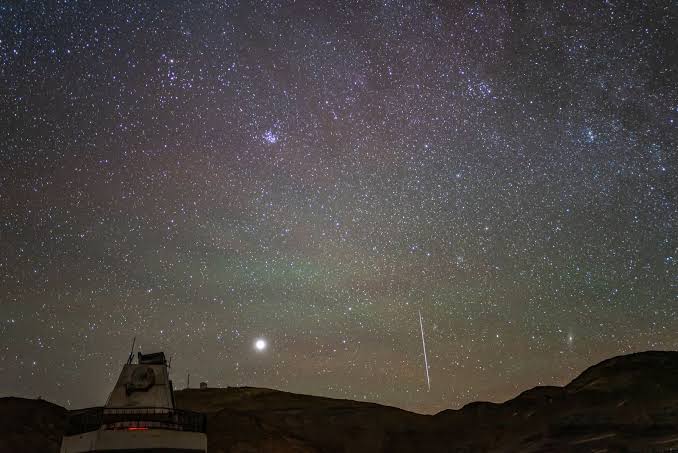

Imagine sitting quietly on the golden sands of the Thar Desert, far away from city lights, while bright meteors streak across the night sky. Jaisalmer is an excellent destination for combining a desert holiday with Geminid meteor-shower viewing, especially from dark-sky areas around the Sam Sand Dunes.
The Geminid meteor shower is active from December 4–17, 2026, with its peak on December 13–14. NASA describes the Geminids as one of the best and most reliable annual meteor showers, with dark-sky observers potentially seeing many meteors during the peak.
Best Time to Visit Jaisalmer for the Geminids
For a dedicated meteor-shower trip, plan your stay around December 12–15, 2026.
The most important night is December 13–14, when the Geminids reach their peak. The shower’s radiant is in the constellation Gemini, but you do not need to stare directly at Gemini—meteors can appear across a large area of the sky.
For the best experience:
- Arrival: December 12 or 13
- Main viewing night: December 13–14
- Best viewing: Late evening through the early morning
- Ideal location: Away from Jaisalmer’s artificial lights
- Recommended stay: 2–3 nights
NASA recommends allowing your eyes time to adapt to darkness and avoiding bright phone screens while observing.
Why Jaisalmer Is Perfect for Stargazing
Jaisalmer’s desert landscape offers wide, unobstructed horizons and many areas outside the city with substantially darker skies. A desert campsite or remote accommodation can provide a much better experience than observing from the illuminated city center.
The Sam Sand Dunes area is particularly attractive for travelers because you can combine:
- Meteor-shower viewing
- Desert camping
- Camel safari
- Jeep safari
- Traditional Rajasthani cultural performances
- Sunset over the dunes
- Stargazing around a desert campfire
However, choose a campsite with minimal artificial lighting if astronomy is your main objective.
Suggested 3-Day Jaisalmer Geminid Trip
Day 1 – Arrive in Jaisalmer
Arrive in Jaisalmer and check into your hotel.
Spend the afternoon exploring:
- Jaisalmer Fort
- Patwon Ki Haveli
- Salim Singh Ki Haveli
- Local markets
In the evening, enjoy dinner and relax. If possible, avoid staying up too late because the following night will be your main meteor-viewing opportunity.
Day 2 – Jaisalmer to Sam Sand Dunes
After breakfast, explore more of the city before heading toward the desert.
You can visit Kuldhara Village en route to the dunes and reach your desert camp by afternoon.
Enjoy:
- Camel safari
- Sunset photography
- Traditional folk music
- Rajasthani dinner
- Cultural performances
After the entertainment and bright camp lighting finish, move to the darkest available area of the camp for meteor watching.
Day 3 – Meteor Shower Experience & Departure
If you stayed awake during the early morning hours, have a relaxed morning.
Enjoy breakfast at the camp, return to Jaisalmer and explore anything you missed before departure.
For a more relaxed holiday, add an extra night in Jaisalmer.
What to Pack
December nights in the Thar Desert can feel cold, particularly during the early morning hours. Pack:
- Warm jacket
- Sweater or thermal clothing
- Scarf and woollen cap
- Comfortable shoes
- Blanket or sleeping bag
- Water bottle
- Sunglasses for daytime
- Power bank
- Red-light torch if available
- Camera and tripod
- Wide-angle lens for astrophotography
A red light is preferable to a bright white flashlight because it helps preserve night vision.
Photography Tips
The Geminids can produce excellent astrophotography opportunities against the desert landscape.
For better photographs:
- Use a tripod.
- Use a wide-angle lens.
- Choose manual focus and focus on the stars.
- Use a relatively long exposure.
- Take multiple photographs rather than waiting for one perfect meteor.
- Keep your phone screen brightness low.
- Include dunes, tents or silhouettes in the foreground for a stronger composition.
Remember that seeing many meteors in photographs requires patience—the meteor you see with your eyes may not necessarily cross the camera’s frame.
How to Watch the Geminid Meteor Shower
You don’t need a telescope. In fact, a comfortable reclining chair or blanket and an unobstructed view of the sky are often more useful.
Find the darkest safe location available, allow your eyes around 20–30 minutes to adjust, and look broadly across the sky rather than concentrating on one small area. NASA specifically recommends getting away from bright lights and avoiding phone screens during observation.
The Geminids are caused by debris associated with 3200 Phaethon, and the meteors appear to originate from the direction of Gemini.
Important Planning Note for 2026
The Moon is not completely absent during the December 13–14 peak period. NASA’s 2026 sky calendar places the Geminid peak on December 13–14, while the Moon is moving away from its December 9 new-moon phase toward first quarter on December 17.
This means the exact moonlight conditions and moonset time should be checked again shortly before your trip, along with the weather and cloud forecast.
Also, advertised meteor rates are not a guarantee. The commonly quoted maximum assumes excellent dark skies and ideal observing conditions; actual numbers depend on light pollution, moonlight, weather, the observer’s field of view and the altitude of the radiant.
Best Jaisalmer Experience
For the ultimate combination of Rajasthan tourism + desert adventure + astronomy, consider this itinerary:
Jaisalmer City → Jaisalmer Fort → Patwon Ki Haveli → Kuldhara → Sam Sand Dunes → Desert Camp → Sunset → Rajasthani Dinner → Dark-Sky Stargazing → Geminid Meteor Shower
The highlight is spending the late night and early morning beneath the desert sky, watching Geminid meteors while surrounded by the peaceful landscape of the Thar Desert.